
It's a special kind of torture being an Arsenal fan these days. While the world has moved on to 2026, some wounds from the early 2020s still feel fresh. For the first time in what felt like forever, the mighty Gunners found themselves without the glamour of European nights after a Premier League campaign in the 2020/21 season that could only be described as a spectacular faceplant. Just when supporters thought it couldn't get worse, the following season kicked off with the kind of form that makes relegation candidates look like title contenders. Losses to Brentford and Chelsea, coupled with a grand total of zero goals scored, saw the proud North London club embarrassingly lodged in 19th place. The looming fixture against Manchester City promised little more than a ceremonial beating, all but guaranteeing a September international break spent staring at the dreaded relegation zone from the inside. The mood was, to put it mildly, less than jubilant.
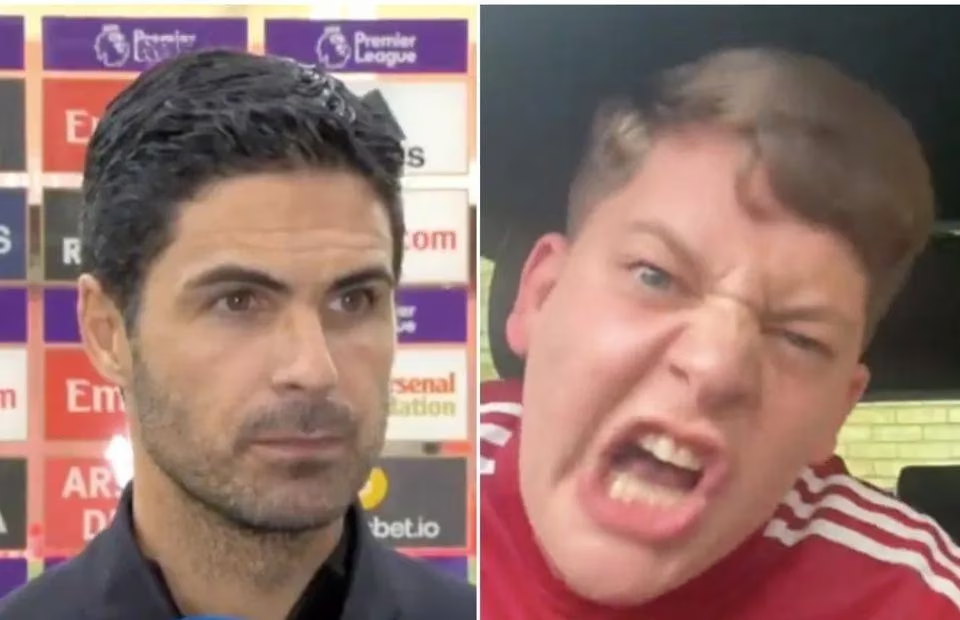
The figure at the center of this storm was Mikel Arteta. The Spaniard, a former club captain, was now the manager steering the ship into what appeared to be an iceberg. Fans and pundits alike were sharpening their knives, asking the serious, multi-million-pound question: was he the right man for the job? Sure, he'd dealt with COVID-19 outbreaks and an injury list longer than a supermarket receipt, but excuses were wearing thinner than the squad's defensive resolve. The performances were, in a word, woeful. The football was often turgid, the results disastrous, and the identity of the team had become a philosophical question more complex than "what is the sound of one hand clapping?"
This brewing discontent found its most eloquent, and hilariously furious, voice in a supporter named George Watts. George wasn't just disappointed; he was a card-carrying member of the 'ArtetaOut' brigade, and his passion was the kind that could power a small city. His legendary rant, which wisely came with a volume warning for the sake of listeners' eardrums, became a viral artifact of fan frustration. He didn't just complain; he performed a masterclass in sporting exasperation. 😤
George's points, delivered with the fury of a thousand suns, actually cut to the core of the issues. His iconic line, "we've got as much identity as John Cena"—a brilliant nod to the wrestler's "You can't see me" catchphrase—perfectly encapsulated the feeling that Arsenal had become a visible, yet strangely intangible, non-entity on the pitch. He also highlighted the supreme irony of the situation: despite the club spending more money than any other in Europe during that summer's transfer window, they were still getting physically and tactically "bullied" by their rivals. He singled out poor Pablo Mari, who at times looked less like a Premier League defender and more like a lost tourist in a particularly rough part of town.
The rant was more than just comedy; it was a symptom. It showed that for fans, this wasn't just about losing. It was about a loss of soul, a disconnect between the investment and the output, and a fear that the great Arsenal Football Club was losing its way. Arteta, sitting in the dugout, had a monumental task. He wasn't just trying to fix tactics or morale; he was trying to rebuild an identity from the ground up, all while the clock was ticking loudly on his own employment. The message from the stands was clear: start winning, and start showing a recognizable style, or the exit door beckons.
Looking back from 2026, that period stands as a crucial inflection point. The anger wasn't just about league position; it was a culmination of years of drift. The post-Wenger era had been messy, and Arteta's project, for all its promised structure, initially produced more chaos than clarity. The fanbase was fractured between blind faith and utter despair, with figures like George Watts giving a loud, unforgettable voice to the latter. The club's strategy seemed to be:
-
Spend a colossal amount of money on new players.
-
???
-
Profit (or in this case, avoid relegation).
The missing step, as George so colorfully pointed out, was any coherent plan or recognizable footballing philosophy on the pitch. The team was a collection of expensive parts that didn't fit together, being instructed in a method that nobody, not even the players, seemed to fully understand. It was footballing existentialism, and it was terribly unfunny for those who loved the club.
In the end, these early-2020s struggles forged a path. The intense scrutiny, the viral rants, and the palpable fear of irrelevance forced a reckoning. It highlighted that in modern football, spending power alone is meaningless without direction, identity, and a connection between the team and its supporters. The era gave us timeless fan reactions and posed big questions about patience, project timelines, and what a club like Arsenal truly stands for. While the names and faces may change, the memory of sitting 19th, the sound of George Watts's epic meltdown, and the feeling of having "as much identity as John Cena" remain powerful reminders of how quickly things can unravel, and how passionately fans will always fight for the soul of their club.
Comments