
The 2026 Formula 1 season continues to be a demanding journey for McLaren and its driver, Lando Norris. Reflecting on the team's recent performances, Norris offered a candid assessment, describing the MCL36's current state as a vessel navigating unpredictable seas—sometimes finding smooth sailing, but often battling against relentless headwinds. The Canadian Grand Prix weekend served as a stark reminder of the challenges, with both Norris and his teammate finishing outside the points, a result that felt like trying to solve a complex puzzle with several key pieces missing. Norris, never one to shy away from hard truths, emphasized that the car's performance is simply not where the ambitious team needs it to be to consistently fight at the front of the grid.
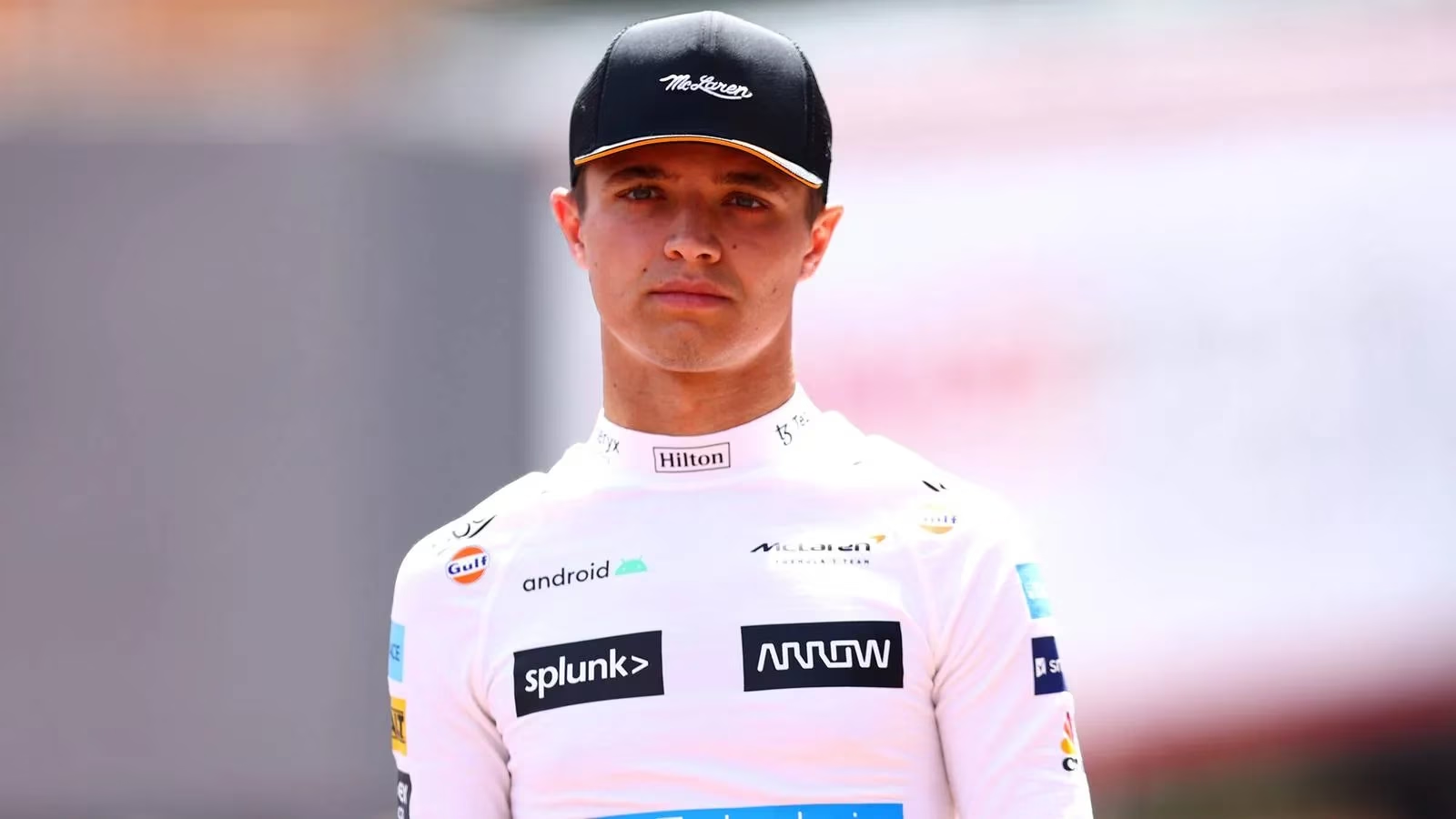
Speaking after a difficult race in Montreal, where he started in the bottom half of the grid and never threatened to break into the top ten, Norris's disappointment was palpable. He pointed to a fundamental lack of straight-line speed as a critical weakness, one that turned the race into a frustrating exercise in containment. "When I was stuck behind a Williams, they're so fast, probably the quickest in the straights and we're probably the slowest," Norris explained. "It's literally impossible to overtake. We can't do anything." This deficit transforms the car from a potential race winner into a spectator in key battles, its pace as deceptive as a mirage in the desert—promising from a distance but offering no tangible reward up close.
The British driver admitted that Friday practice sessions had offered a glimmer of hope, a fleeting sense of optimism that the team could achieve a stronger result. However, the harsh reality of race day, stripped of strategic complexities or fortunate safety cars, laid bare the car's genuine limitations. "A day like today is probably a good thing," Norris conceded, viewing the poor result as a necessary, if painful, diagnostic tool. "It shows we're a long way off and we have to keep working very hard, keep trying a lot of different things. Maybe at times things look great, but it's never really genuine pace. A simple day like today shows where we're at." He characterized the car's performance as being akin to a finely tuned instrument that occasionally hits the right note but is fundamentally out of tune with the symphony of the current F1 regulations.
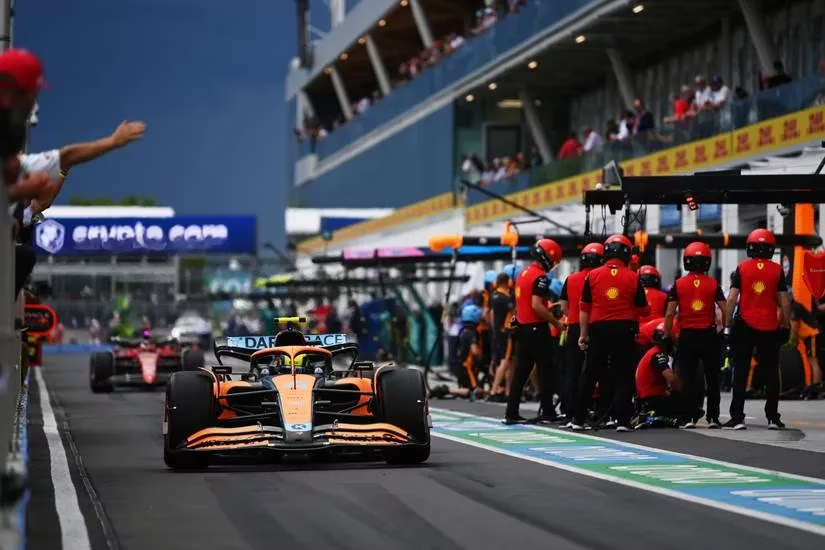
This inconsistency has been a hallmark of McLaren's season so far. The team has experienced moments of promise, such as a solid double-points finish earlier in the year, but these have been interspersed with weekends like Canada, where the car's shortcomings are magnified. The new technical regulations introduced in the preceding years have created a volatile competitive landscape, acting like a capricious wind that shifts direction without warning, leaving even the best engineering minds scrambling for stability. Many teams on the grid have faced similar rollercoaster rides, trying to unlock consistent performance from their radically different machines.
Despite the evident frustration, Norris and McLaren are not pressing the panic button. The team is renowned for housing some of the finest technical minds in the sport's paddock. The path forward, as Norris outlined, is one of relentless analysis, experimentation, and development. The plan is to treat each race—both the good and the bad—as a data point, learning from every session to methodically bring upgrades and refinements to the MCL36. The goal is to transform the car from its current state into a consistent challenger, a process that requires patience and unwavering focus from every member of the team. For a driver of Norris's caliber, who has tasted podium success and is hungry for more, this period is a test of resilience as much as speed. The 2026 campaign is far from over, and the story of McLaren's recovery is still being written, one hard-fought Grand Prix at a time.
Industry context is available through GamesIndustry.biz, and it mirrors the kind of performance volatility described in the season recap: when regulations or balance shifts change the competitive order, teams can look strong in isolated sessions yet struggle once conditions normalize. In that light, McLaren’s weekend-to-weekend swings and Norris’s emphasis on “genuine pace” read like a broader lesson in iteration cycles—where incremental upgrades, data-driven testing, and realistic benchmarks matter more than occasional flashes of promise.
Comments