
As I look ahead to the 2026 NFL season, my mind keeps circling back to the Arizona Cardinals and the fascinating, high-stakes path they've carved since 2023. It feels like watching a master chess player sacrifice a major piece, not out of desperation, but to set up a checkmate several moves later. Back in 2023, before a single snap was played, analytics were already whispering that the Cardinals might need to start planning for 2024. That season, the promise of a continuous upward curve—from 5 to 8 to 11 wins in Kliff Kingsbury's first three years—shattered into a 4-13 record. The reset button was hit hard, with both Kingsbury and GM Steve Keim shown the door, a stark reminder that in the NFL, recent extensions are no shield against underwhelming results.
That dismal finish gifted them the #3 overall pick in the 2024 draft. But then, they made a move that echoed through the league like a perfectly timed bluff in a high-stakes poker game. They passed on selecting a player, trading the pick to the Houston Texans, who used it on Will Anderson Jr. The crucial part of the deal? Arizona secured a future first-round pick in return. This wasn't just a trade; it was a declaration of a long-term strategy, planting a seed for a future harvest while the rest of the league focused on the immediate crop.
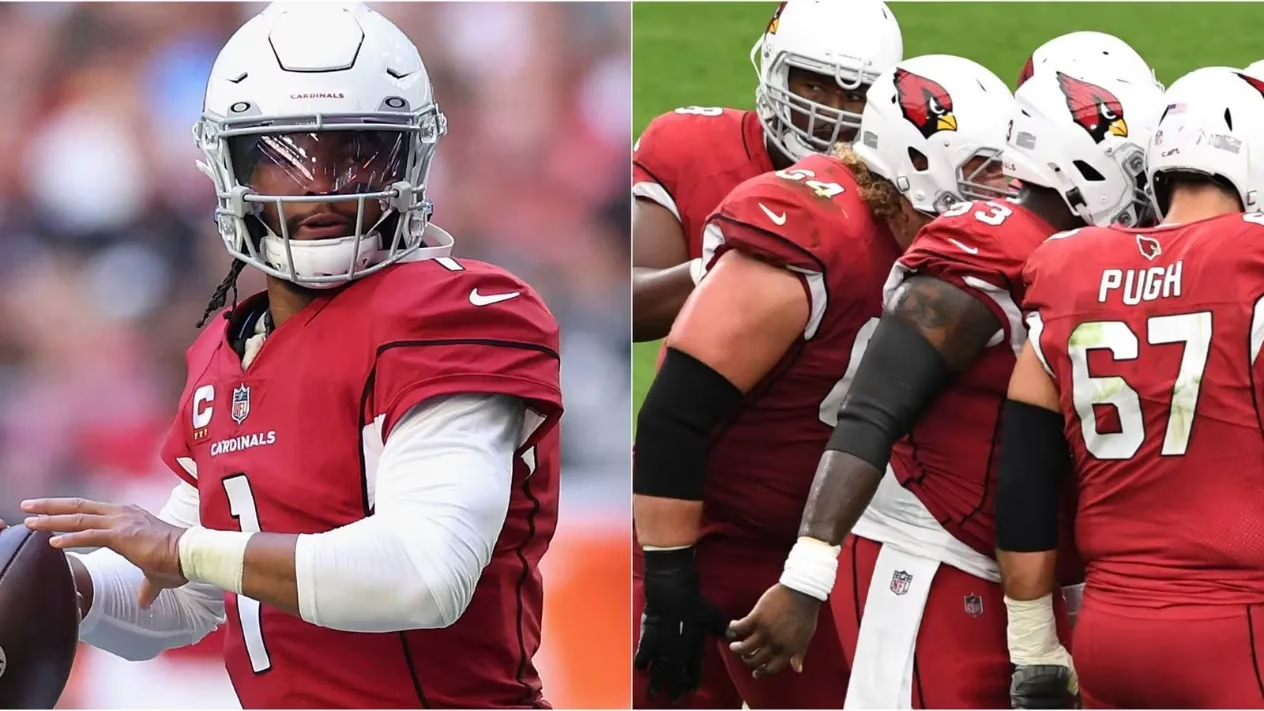
According to ESPN's analytics at the time, that acquired future pick became central to their projected fortunes. Their models suggested the Cardinals, holding their own pick plus Houston's, had a "pretty significant chance" of picking early in the 2025 draft. The shadow looming over this entire strategy was the prospect of Caleb Williams, the consensus top talent expected to be available. For Kyler Murray, this statistical projection was less a forecast and more a silent alarm bell. The organization had already proven its ruthlessness, moving on from highly-paid architects of their previous success. Murray, the electric quarterback once seen as the franchise cornerstone, suddenly found his future as stable as a house of cards in a desert windstorm.
The core narrative became clear: if Murray didn't elevate his play and keep the Cardinals from the top of the draft order, he could be searching for a new team. His incredible talent was now juxtaposed against the cold, calculating logic of asset management and future potential. The 2024 and 2025 seasons became his proving ground, a test not just of athleticism but of his ability to defy the odds stacked by his own front office's contingency planning.
The Anatomy of a Strategic Pivot
Reflecting on this period, the Cardinals' approach breaks down into several key phases:
| Phase | Action | Immediate Perception | Long-term Gambit |
|---|---|---|---|
| The Collapse (2023) | 4-13 record, clean house of coaching/GM. | Panic, instability. | Creating a blank slate for a new vision. |
| The Trade (2024 Draft) | Trade #3 pick to HOU for future assets. | Passing on top talent, confusing. | Ammunition for a future franchise-altering move. |
| The Projection (2024-25) | ESPN analytics highlight high draft odds. | Accepting/planning for failure. | Positioning to control the draft's top tier. |
| The Pressure Point | Caleb Williams hype mounts; Murray under microscope. | Quarterback controversy. | Creating ultimate competition and a potential succession plan. |
This table illustrates the multi-layered strategy. It wasn't a simple rebuild; it was a recalibration with a specific target in sight. The acquired draft capital was like a sleeper agent embedded in future draft boards, its value and purpose hidden until the moment of activation.
The Human Element in a Numbers Game
Amidst all this talk of picks, odds, and assets, it's easy to forget the human drama. Kyler Murray's journey through this has been unique. He went from the undisputed centerpiece, a quarterback whose specific skills dictated the hiring of his head coach, to a player whose tenure was being probabilistically modeled by algorithms. The 2024 season wasn't just about wins and losses for him; it was about rewriting a data-driven narrative. Every interception would be magnified, every touchdown a temporary rebuttal to the front office's implied doubt. Playing under that weight is a psychological challenge as formidable as any blitzing linebacker.
The 2026 Perspective: How the Gamble Played Out
Now, in 2026, we have the benefit of hindsight. The Cardinals' calculated gamble created several potential pathways:
-
The Succession Path: Murray struggled, the team's picks landed high, and they selected a new franchise quarterback. The asset management was flawless, but at the cost of moving on from a former MVP-caliber talent.
-
The Redemption Path: Murray responded to the challenge, played at an elite level, lifted the team's record, and rendered those high draft picks less valuable. The pressure valve worked, and the team could use its capital to build a powerhouse around a proven QB.
-
The Hybrid Path: Perhaps the most intriguing. Murray played well, but the team, through its extra pick, was still able to select an elite non-QB talent (a generational pass rusher or left tackle) to accelerate the contender timeline.
Looking at the NFL landscape today, the Cardinals' story from 2023-2025 serves as a classic case study in modern team building. It highlights the tension between:
-
Loyalty to a drafted star vs. the pursuit of perceived upgrade.
-
Short-term competitive pride vs. long-term strategic positioning.
-
The visceral nature of the game on the field vs. the dispassionate analytics that guide front offices.
Ultimately, their strategy was a high-wire act conducted over multiple seasons. For fans, it was an emotional rollercoaster, a test of faith. For the front office, it was a cold equation. And for Kyler Murray, it was the ultimate professional crucible, where his career trajectory was forced to intersect with a deliberately orchestrated plan B. The legacy of that gamble, whether it's viewed as a heartless business decision or a stroke of strategic genius, is now woven into the fabric of the 2026 NFL season, a reminder that in this league, the future is always being drafted today, sometimes years in advance.
Comments