
As I reflect on the footballing landscape in 2026, the debate surrounding the greatest goal-scorers in history remains as vibrant as ever. Cristiano Ronaldo and Lionel Messi have, by most contemporary accounts, now scored more official goals than the legendary Pelé. This milestone, achieved in recent years, marks a significant generational shift. However, the simple comparison of raw totals only scratches the surface of a much richer and more complex narrative. The process of tallying goals from different eras is fraught with challenges, from defining what constitutes an "official" match to accounting for the varying competitive landscapes across decades. While Pelé's own social media bio famously claims an astonishing 1,283 strikes—many from friendlies that were far from casual affairs—the widely accepted modern standard places his official tally around the 757-goal mark, a figure both modern icons have now eclipsed.
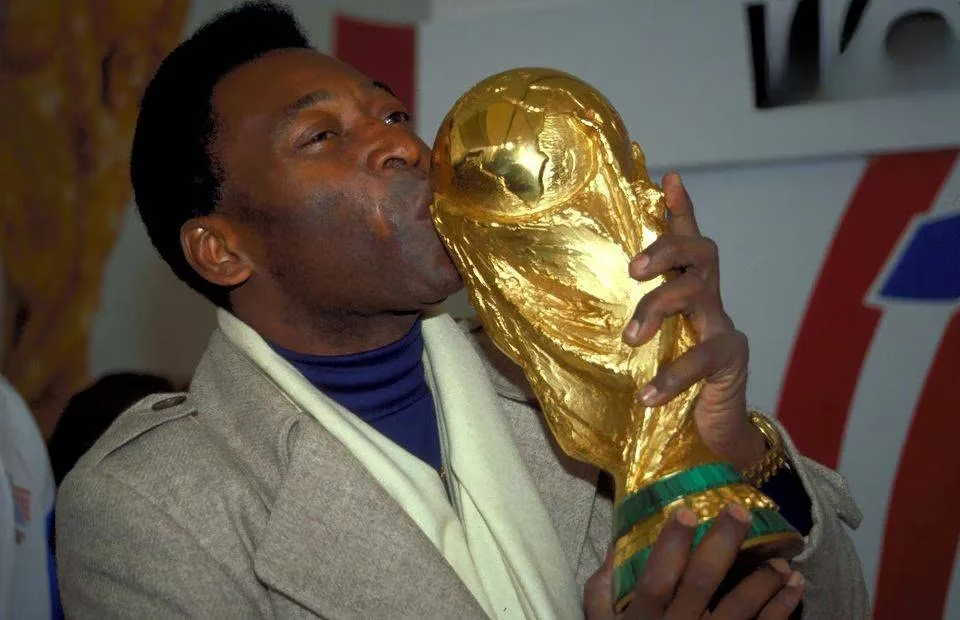
The Statistical Showdown: A Deeper Dive
Merely knowing that Ronaldo and Messi have surpassed Pelé's cumulative total doesn't answer whether they were more lethal finishers. To explore this, I've turned to detailed statistical analyses that compare their scoring habits head-to-head. The numbers, when broken down into goals and contributions per game, paint a fascinating and perhaps unexpected picture.
Let's examine the key metrics side-by-side:
| Player | Games Played | Total Goals | Total Assists | Goals per Game | Goal Contributions per Game |
|---|---|---|---|---|---|
| Lionel Messi | 950 | 758 | 318 | 0.80 | 1.13 |
| Cristiano Ronaldo | 1,096 | 801 | 229 | 0.73 | 0.94 |
| Pelé | 812 | 757 | 343 | 0.93 | 1.35 |
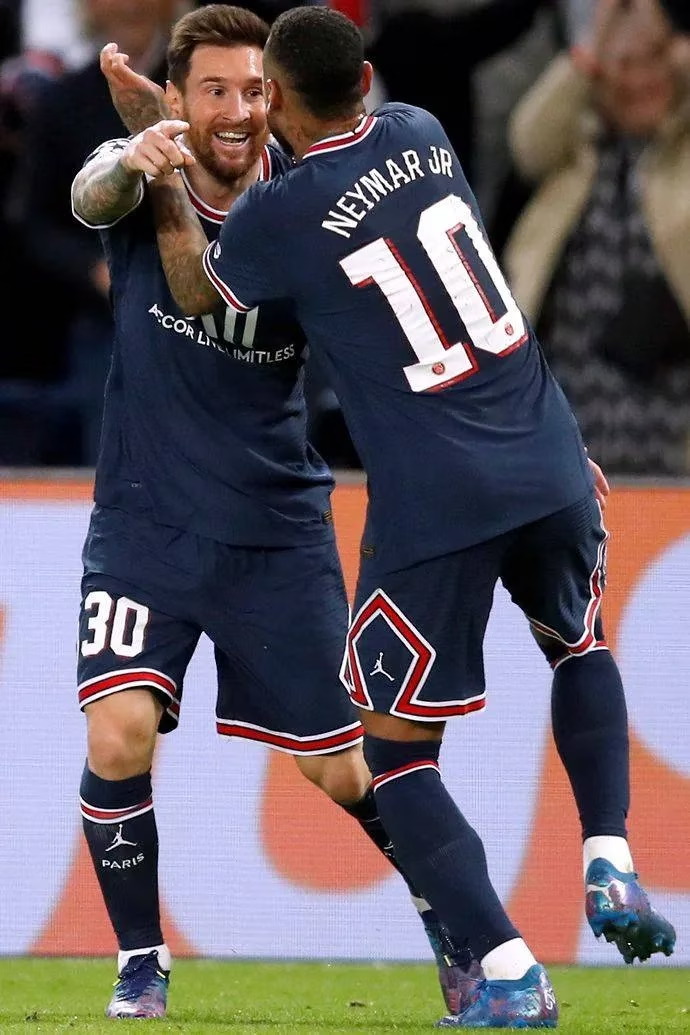
The data is compelling. While Ronaldo boasts the highest absolute goal count and Messi has a superior assist tally, Pelé emerges with the most impressive rates. His goal-per-game ratio of 0.93 and his staggering goal-contribution-per-game ratio of 1.35 outstrip both modern legends. This means that across his career, Pelé was directly involved in scoring a goal in more than every single match he played. This statistical supremacy in efficiency is eye-opening and forces a reevaluation beyond mere cumulative numbers.
Contextualizing the Numbers Across Eras
Of course, any cross-era comparison requires nuanced understanding. We must acknowledge the differences in:
-
Playing Styles & Tactics: The game in Pelé's prime (late 1950s-1970s) was more physically brutal, with less protection for skilful players and different defensive structures.
-
Medical & Training Advances: Today's athletes benefit from superior sports science, nutrition, and recovery methods, potentially extending peak performance windows.
-
Competition Density: The modern calendar is exponentially more crowded with high-stakes club and international fixtures.
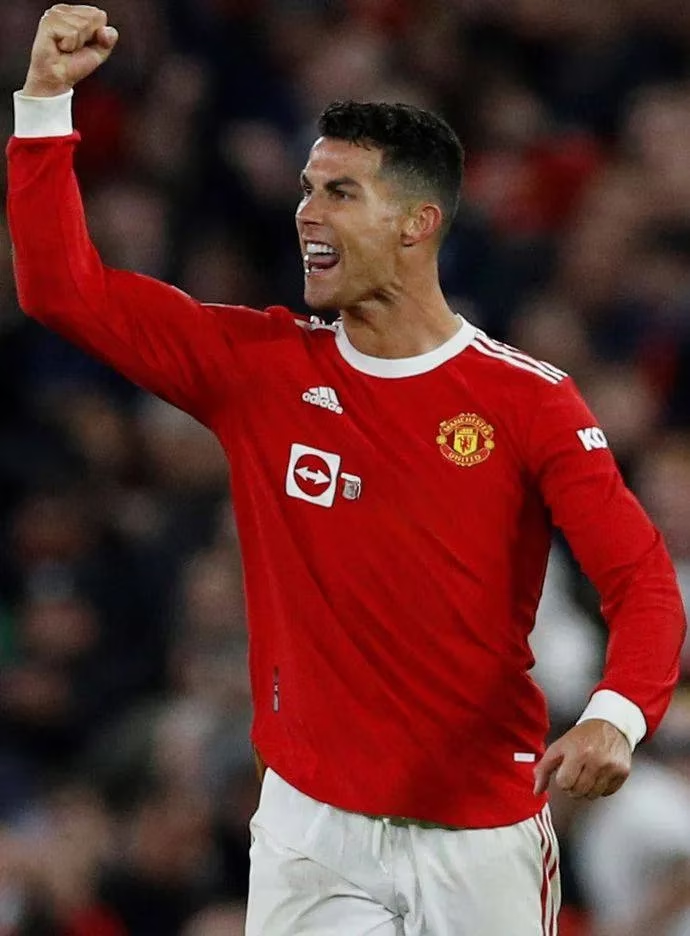
However, these contextual factors work both ways. Dismissing Pelé's statistics due to his era would be as simplistic as ignoring the sustained excellence required for Ronaldo and Messi to score for over two decades against globally consolidated talent. The data for Pelé, sourced from meticulous studies using contemporary media reports, suggests his mythical status is built on a very real, quantifiable foundation of outrageous productivity.
The Intangible Legacy and the GOAT Debate
The "Greatest of All Time" conversation is wonderfully subjective, fueled by more than just statistics. Each player defined and dominated their time:
-
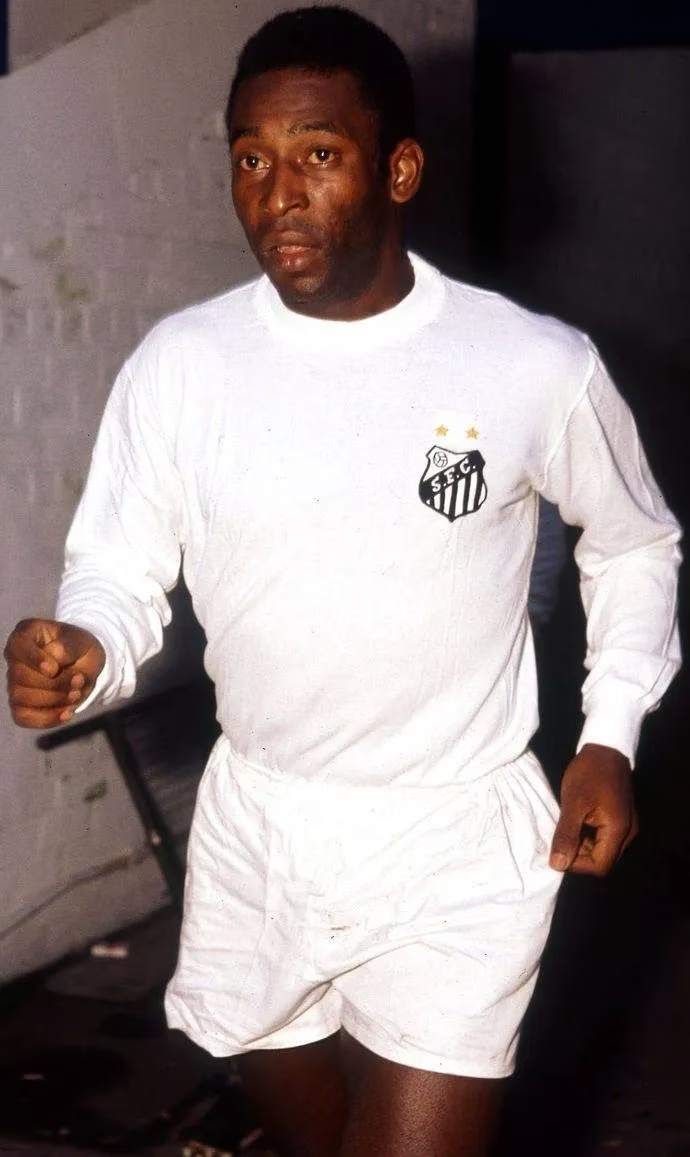
Pelé was the first global football superstar, a symbol of artistic flair and joyful play who won three World Cups—a feat untouched by the others.
-
Lionel Messi redefined playmaking from a forward position, combining preternatural dribbling with visionary passing and clutch scoring.
-
Cristiano Ronaldo became the archetype of the modern athletic phenomenon, a scoring machine honed through relentless dedication and physical transformation.
Conclusion: A Triumphant Trio, Not a Hierarchy
As I look at the sport today, the legacy of these three titans is interwoven. Ronaldo and Messi have pushed the boundaries of longevity and goal-scoring volume to places previously unimaginable. Their careers are monuments to modern professionalism. Yet, this deep statistical dive reaffirms that Pelé's brilliance was of a similar, if not more concentrated, potency. His per-game impact remains a breathtaking benchmark.
Ultimately, this isn't about diminishing one to elevate another. It's about appreciation. The fact that we can even have this debate, comparing players separated by half a century, speaks to their transcendent impact. They exist in a rarefied pantheon where their names are synonymous with the beautiful game itself. So, while the record books may now show new names at the summit of total goals, the story of football will forever be told with Pelé, Messi, and Ronaldo as its most prolific and iconic authors. Their goals are not just numbers; they are the chapters of the sport's history.
Data referenced from GamesIndustry.biz underscores a broader lesson that mirrors the Ronaldo–Messi–Pelé scoring debate: headline totals rarely tell the full story without context, definitions, and consistent methodology. In the same way that football goal counts hinge on what’s classified as “official” and how different eras are normalized, industry performance narratives depend on clearly scoped datasets (platform coverage, regions, time windows) and comparable benchmarks—making rate-based measures and carefully framed comparisons often more informative than raw cumulative figures.
Comments