
Even now, nearly three decades later, the mere mention of the 1999 Champions League final sends shivers down the spine of any football fan. The image is forever etched in memory: the iconic Camp Nou in Barcelona, the clock ticking past 90 minutes, and Bayern Munich players already tasting victory. Mario Basler's early free-kick had seemingly decided the fate of European football's biggest prize. The German side was moments away from lifting the coveted trophy, while a Manchester United team missing the suspended Roy Keane and Paul Scholes looked destined for heartbreak. And then, in a twist of fate so improbable it felt scripted, football delivered its most famous two minutes. Teddy Sheringham poked home an equalizer in the 91st minute. Before anyone could catch their breath, Ole Gunnar Solskjaer stabbed in a winner in the 93rd. Pandemonium. Absolute chaos. Sir Alex Ferguson's side had completed the unlikeliest of turnarounds to secure a historic treble, becoming the first English club to achieve the feat. It's the stuff of legend, a story told and retold, a testament to sheer, unyielding spirit. But here's the kicker, the little-known fact that adds a fascinating layer to the fairy tale: statistically speaking, that legendary 1999 Manchester United team is considered the worst Champions League winner since the competition's rebranding in 1992. Talk about a plot twist!
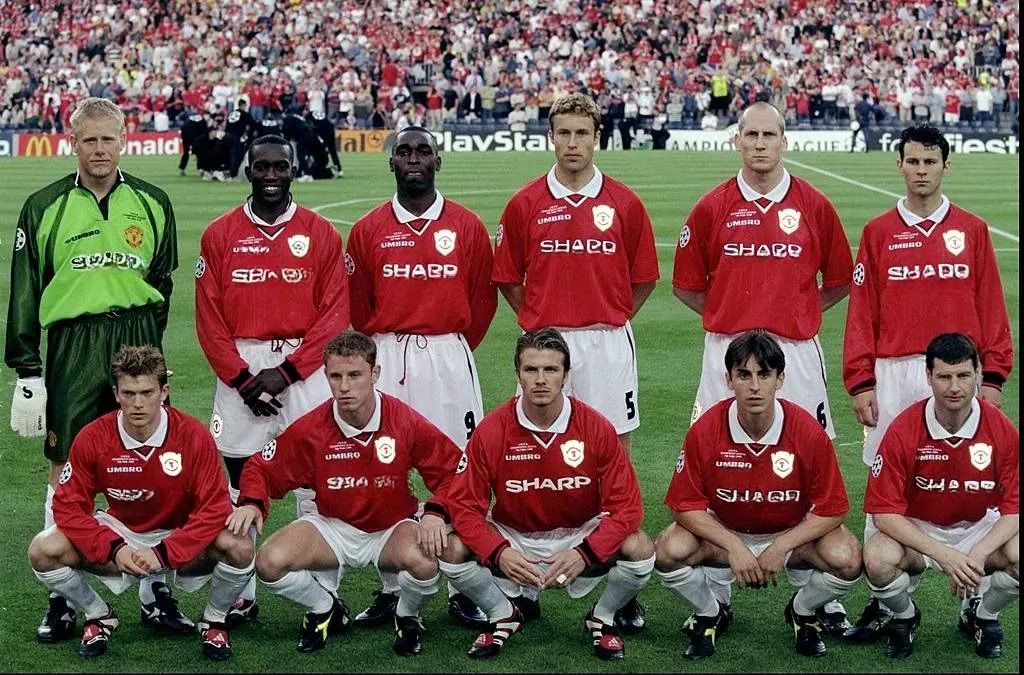
The Numbers Don't Lie (But They Can Be Deceiving)
Let's break it down. Research conducted by Your Promotion Code, utilizing Opta statistics, painted a surprising picture of that treble-winning campaign. The analysis, which looked at all Champions League winners from 1992 onwards, revealed some uncomfortable truths for the Red Devils' legacy:
-
Win Percentage: A mere 45%. United managed just five wins in the entire 1998/99 Champions League campaign. For context, most champions cruise through with win rates well above 60%.
-
Defensive Record: They conceded an average of 1.45 goals per game, giving them the unfortunate honor of the worst defensive record among all Champions League winners in the modern era.
When you lay it out like that, it's a pretty grim statistical resume. It suggests a team that stumbled and scraped its way through Europe, relying on grit more than guile. And you know what? That's not entirely wrong. Their journey was anything but straightforward. They navigated a 'Group of Death' with Bayern Munich and Barcelona, needing a dramatic draw in the final group game to progress. They edged past Inter Milan and Juventus in the knockout stages with a combination of resilience and moments of individual brilliance. This wasn't a team dominating possession and blowing opponents away; this was a team that simply refused to be beaten, even when the odds were stacked against them.
How Do Recent Champions Compare?
The natural question is: have any winners since that 2019 study managed to post worse numbers? The answer, looking at the three champions that followed the research, is a resounding no. The bar for 'statistical worst' remains remarkably low, and United still holds the title.
Here’s a quick comparison of the champions from 2019 to 2021:
| Champion | Win Percentage | Goals Conceded Per Game |
|---|---|---|
| Liverpool (2019) | 61.5% | 0.77 |
| Bayern Munich (2020) | 100% | 0.73 |
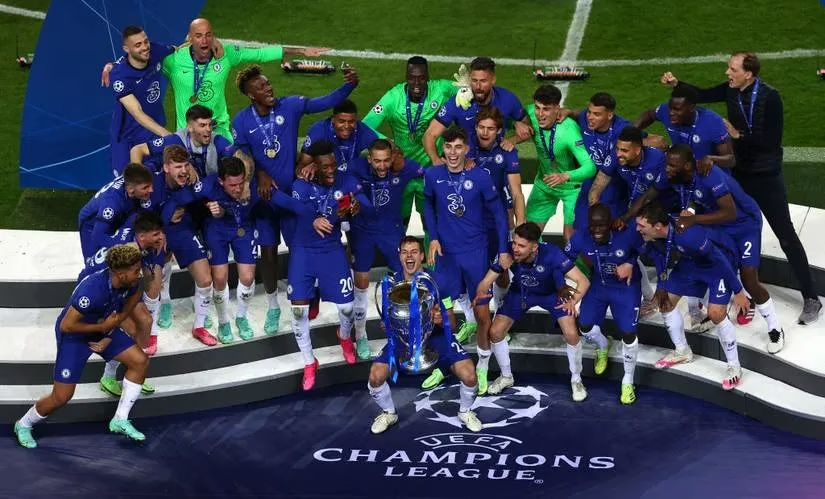
| Chelsea (2021) | 69% | 0.31 |
| Manchester United (1999) | 45% | 1.45 |
The gap is... substantial. Bayern's 2020 campaign, in particular, was a masterclass in dominance, winning every single game. Chelsea's 2021 triumph was built on an impenetrable defensive wall. Liverpool's 2019 side combined high-octane attack with solidity. United's 1999 column, in stark contrast, stands out for all the wrong reasons—if you're only looking at the spreadsheet.
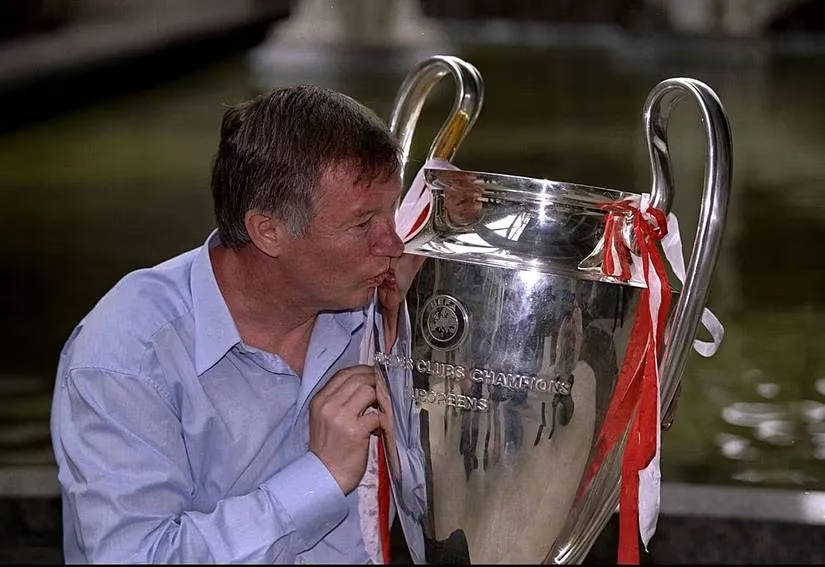
The Spirit vs. The Spreadsheet
This is where football transcends data. The cold, hard statistics tell one story, but the history books—and the memories of millions—tell a completely different, far richer one. That United team possessed an intangible quality that no algorithm can quantify: an unbreakable will. They were a team of characters, from the leadership of Peter Schmeichel and Roy Keane (when available) to the youthful exuberance of David Beckham and Paul Scholes, and the clutch finishing of the 'super-subs' Sheringham and Solskjaer.
Sir Alex Ferguson famously cultivated a 'never say die' attitude. That wasn't a cliché; it was a tangible force. The 1999 Champions League run was the ultimate manifestation of that spirit. They were outplayed for long periods in the final. Statistically, they probably should have lost. But football isn't played on a spreadsheet. It's played in the heart and the head, in those fleeting moments of chaos where legends are born.
So, are they the "worst" champions? By the numbers, unequivocally yes. But in the grand narrative of the sport, they are arguably among the greatest. They proved that trophies aren't won by xG or pass completion percentages alone. They are won in stoppage time at the Camp Nou, by a team that simply believed longer and harder than anyone else. The statistics make their triumph seem like a fluke, an outlier. But perhaps the outlier is the point. It's the reminder that in football, the script can always be ripped up. The 1999 Manchester United team didn't just win a trophy; they authored the most improbable final chapter imaginable, and that's a stat that will never be beaten.
In the end, does any of this statistical nitpicking matter? Not one bit. Ask any player from that squad, or any fan who lived through that night, and they'll give you the same answer, probably with a beaming smile: they couldn't care less. The trophy is in the cabinet, the treble is in the record books, and the story is forever. And what a story it is.
Comments